
Profile hub released, templates in progress and a 37% growth
Following the learn-by-doing approach, in September 2024 I started working on my first app, Drinklytics. In these articles I share my journey, ideally once a month
I failed, and maybe I could have done more, but I see goals, especially for this side project, as inspirational moonshots.
In July 2025, I set a goal for Drinklytics: 1000 active installs in six months.
We could talk about how relative 1000 active installs are as a goal: for some people it’s unachievable, for others it’s just a simple step.
I won’t go deep into this; for me it’s a goal that helps me growth in multiple ways.
So, let’s see how good December has been for Drinklytics.
✅ Done
I released the profile feature, a hub of data that gives an overview of a user’s tasting journey.
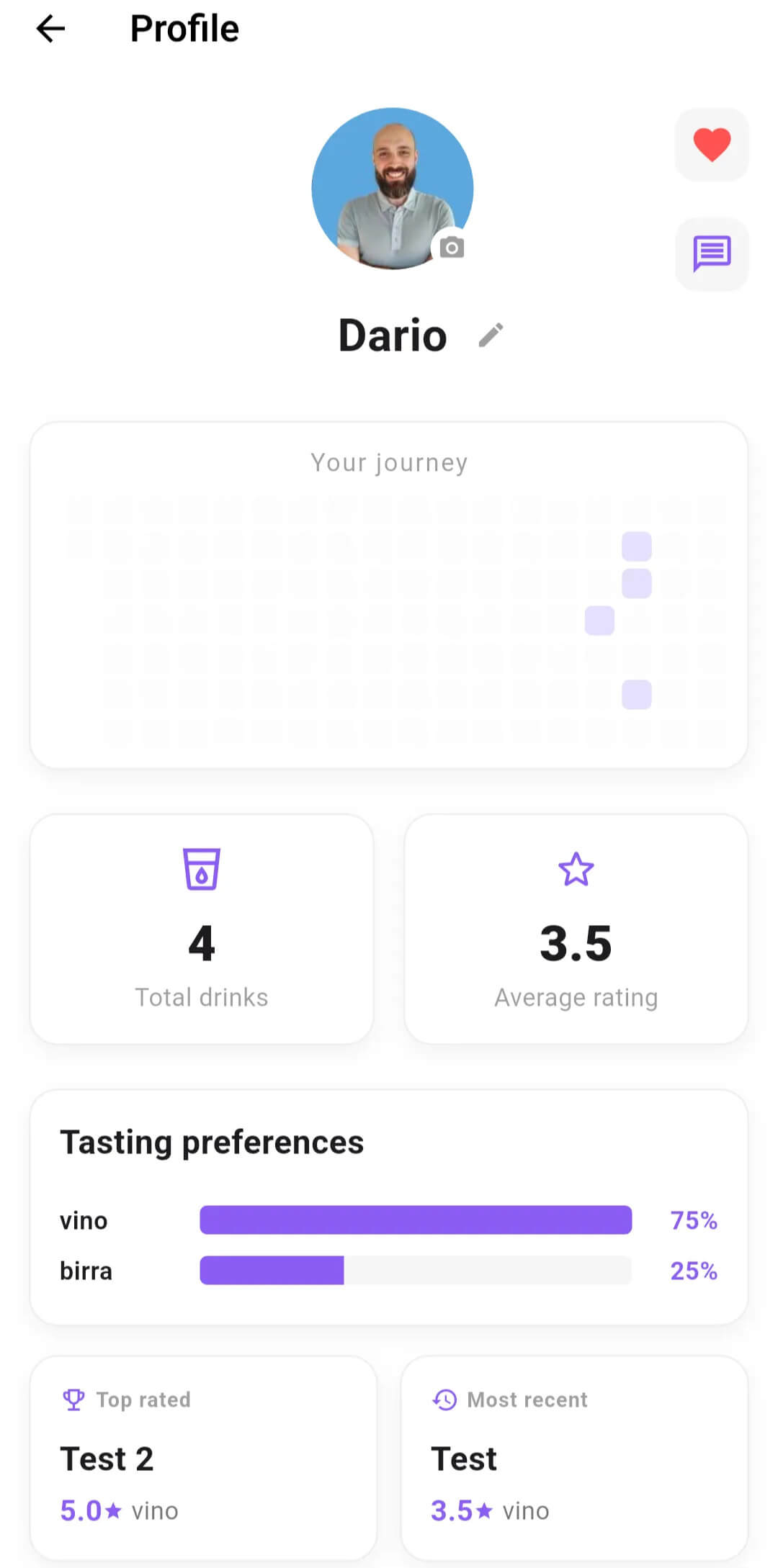
As a first version it’s quite simple, a tasting heatmap and some charts; I will improve it in the future releases, but it works, adds nuances and makes the path I expect for the app clearer.
I also decided to make the profile hub the place where users can contribute to the project, in three ways:
- support by sharing
- support by donation
- support by giving feedback
Sharing and donating unlock a “supporter” badge, but for now it’s only a badge of honor: I would like to unlock some features by sharing, but I’d also like to give the whole value to all the users, so I want to think more about it.
The badge is unlocked as soon as a user taps the call to action. I don’t know if and when a user shares the app, and I don’t really want to know that, it’s their device.
Regarding donations, with the current setup, I don’t know who is donating, so the easiest way for now is to just unlock the badge after a tap. I am fine with this, and I make it clear inside the app.
🚧 Progress
After the release of the profile section, I received two feature requests from users, and they asked for the same thing: a drink template system, to customize the fields of new drinks based on the drink type, making it faster to log a new one. That makes sense to me.
I am working on this new feature, which involves many aspects to consider:
- should I apply a template to older entries? If so, how?
- should I allow users to override a template while logging a new drink?
- should I let users find pre-made templates?
- should I make some fields mandatory regardless of templates?
I am making good progress and in the next update post I should be able to summarize the choices I made.
📈 Numbers and goals
As usual, some number to show the growth of Drinklytics.
These are active, organic installs, with a 37% increase compared to November.
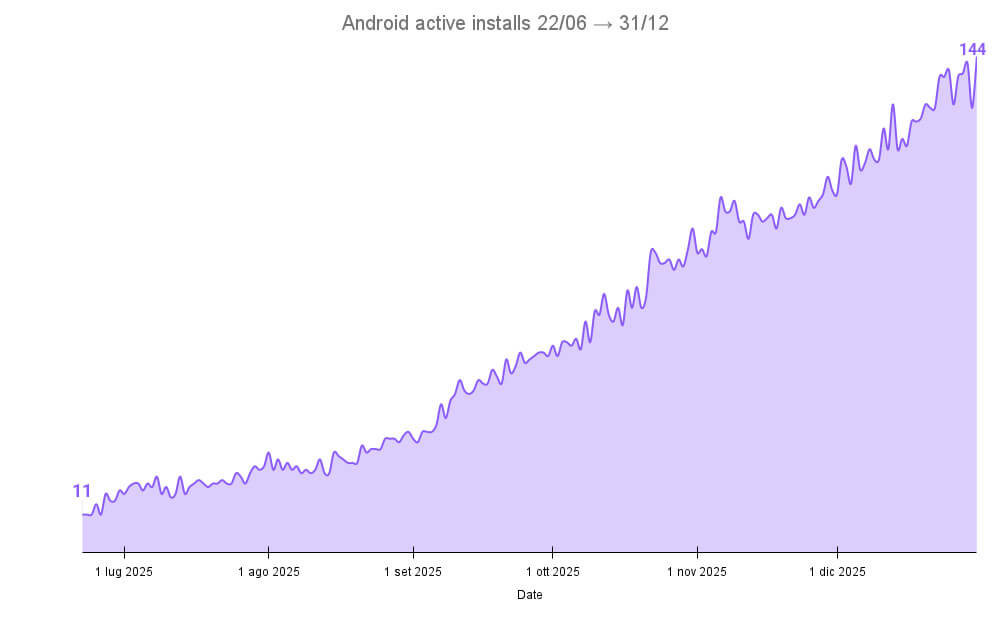
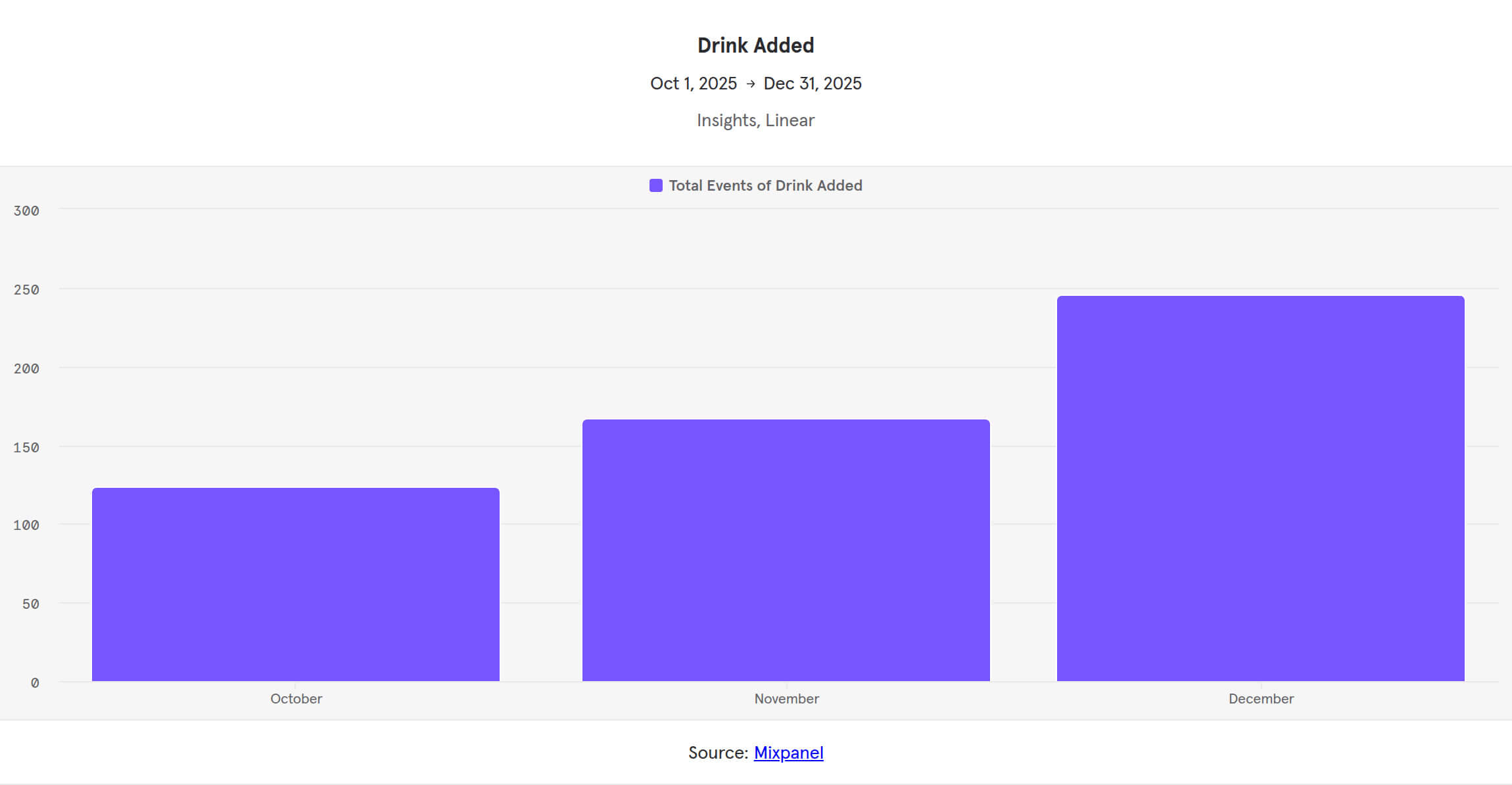
And here some Mixpanel numbers, from the people who enabled the stats tracking (pure love for them <3).
Total drinks added
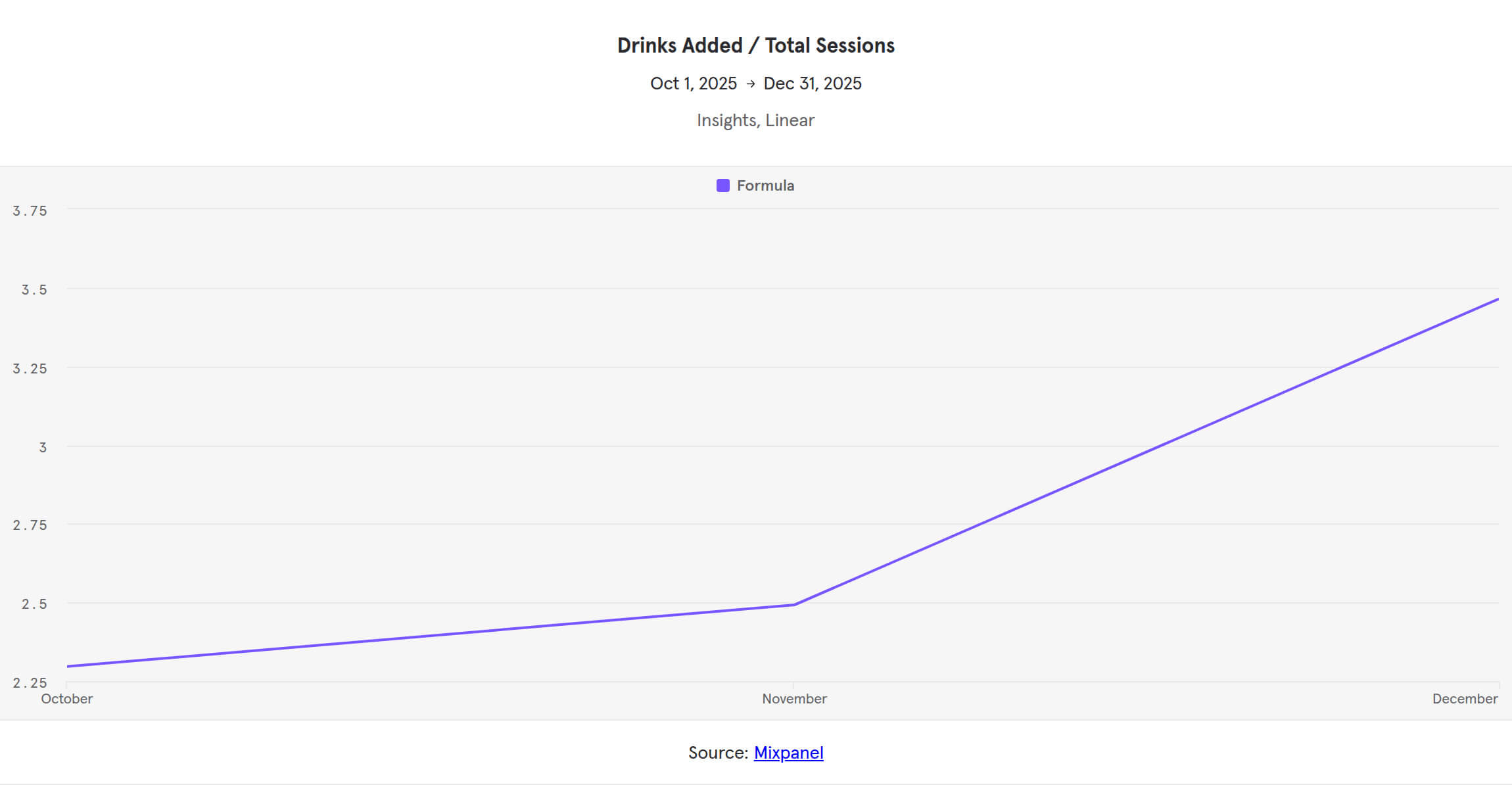
And the drinks added ratio
Any thoughts on what I wrote? Reply by email. I read everything.